May 19, 2026, 11:00 a.m. to 12:00 p.m. MDT
The Joplin Tornado at 15
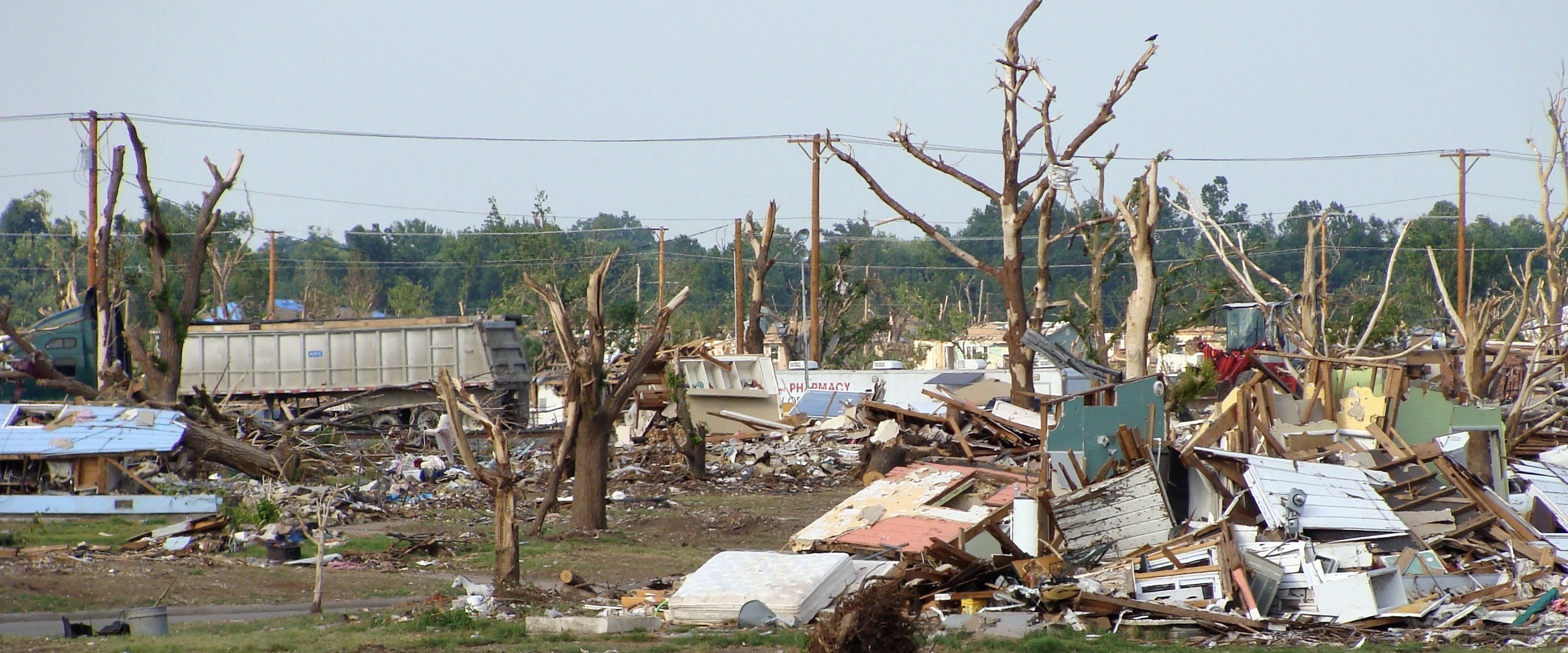 The aftermath of the EF-5 tornado in Joplin, Missouri, June 12, 2011. Matt Jeppson / Shutterstock.com
Webinar Description
On the afternoon of May 22, 2011, an EF-5 tornado touched down in Joplin, Missouri. With wind speeds up to 200 miles an hour, it tore through the city, killing 161 people, injuring more than 1,000, and destroying over 8,000 buildings, including a major hospital, schools across then district, and other critical facilities. It was the deadliest tornado in the United States since modern record-keeping began in 1950, and with $2.8 billion in damages, it still stands as the costliest.
The Joplin tornado was a turning point disaster in United States history, revealing life-threatening vulnerabilities and inspiring profound changes in extreme weather preparedness, response, recovery, and resilience.
This webinar will bring together research and community resilience experts to mark the 15th anniversary of the Joplin tornado. They will engage in a reflective and wide-ranging discussion of how the disaster shaped research, policy, and practice.
Each panelist will share insights from their own work, which ranges from tornado resilient engineering to creative mental health interventions that have helped the community recover and heal. They'll also discuss lessons from the Joplin tornado that have been overlooked and opportunities to strengthen hazard resilience for communities across the nation.
This webinar will be recorded and posted on the Natural Hazards Center website after the event. Please remember to sign up for future webinars and free resources here.
Speakers
Meg Bourne, Art Feeds
Jane Cage, InsightFive22
Jennifer First, University of Missouri
Marc Levitan, National Institute of Standards and Technology
Resources
Expression and Healing: The Story of Art Feeds
The Joplin Tornado: A Calamity and a Boon to Resilience, 10 Years On
Major New Building Standard Can Map Out Tornado Threat for the First Time
NIST Research Is Setting the Standard to Help Buildings Withstand Tornadoes

Meg Bourne is a social entrepreneur, community organizer, and founder of Art Feeds, a nonprofit dedicated to supporting children's mental and emotional well-being through creative, trauma-informed care. In response to the 2011 Joplin tornado, Bourne mobilized Art Feeds to serve 16 local schools, providing immediate and sustained creative mental health interventions for children impacted by the disaster. Using this model, Art Feeds has since expanded globally, reaching more than 300,000 children through creative evidence-based, trauma-informed programming. In addition to her nonprofit leadership, Bourne is a practicing therapist, integrating psychotherapy, therapeutic art, and embodiment in her clinical work. She also designs inclusive, care-centered spaces through the lens of neuroaesthetics. Her work has been featured in Forbes, Fast Company, ABC, and HuffPost.

Jane Cage is a nationally recognized leader in disaster recovery and community resilience. She served as volunteer chairman of the Citizens Advisory Recovery Team (CART) in Joplin, Missouri, following the devastating 2011 tornado. Under her leadership, CART guided a citizen-led long-term planning process that formed the basis for Joplin’s long-term recovery plan. Cage is an adjunct instructor at the Federal Emergency Management Agency's National Disaster Emergency Management University, teaching a course on the Role of the Community After a Disaster. She has served on the Resilient America Roundtable at the National Academy of Sciences and on the external assessment panel for the Center for Risk-Based Community Resilience Planning at Colorado State University, sponsored by the National Institute of Standards and Technology (NIST). Her work has been recognized with the inaugural Rick Rescorla National Award for Resilience from the Department of Homeland Security and the Meta-Leader of the Year award from the Harvard National Preparedness Leadership Initiative. She speaks nationally on community engagement and collaboration and has traveled with her church group on more than fifteen trips to assist disaster-affected communities across the Midwest. Cage is the editor of Joplin Pays It Forward, a handbook that shares lessons learned from 48 local recovery leaders.

Jennifer First is a social scientist in the School of Social Work at the University of Missouri and co-director of the Disaster and Community Crisis Center. Her research examines how individuals perceive, respond to, and recover from extreme weather hazards, with particular emphasis on tornado warning reception, protective decision-making, and post-tornado mental health. Following the 2011 Joplin tornado, she collaborated on a series of studies examining long-term recovery, including mental health outcomes, service utilization, and persistent unmet needs among affected residents. This work includes documenting survivors’ lived experiences years following the disaster—often described as “tornado brain”—reflecting the enduring cognitive and psychological effects of tornado-related trauma and highlighting the need for sustained, long-term investment in mental health services and comprehensive recovery supports.
Marc Levitan is the lead research engineer for the National Windstorm Impact Reduction Program at the National Institute of Standards and Technology (NIST). He has over 25 years of experience in research on tornado, hurricane, and extreme wind effects on buildings and structures. With respect to tornado research, Levitan served as lead investigator for NIST’s National Construction Safety Team technical investigation of the 2011 Joplin tornado, as well as for the NIST study of the 2013 Moore tornado. Levitan also heads up implementation of many recommendations resulting from these investigations, including chairing the American Society of Civil Engineers committee that developed the tornado load provisions for ASCE 7-22; the International Code Council (ICC) committee that developed the 2023 and previous editions of the ICC 500 Storm Shelter standard; and co-chairing the American Society of Civil Engineers/Structural Engineering Institute/American Meteorological Society committee developing a new standard on Wind Speed Estimation in Tornadoes. Levitan and colleagues were honored with a Department of Commerce Gold Medal and the 2024 Samuel J. Heyman Service to America Medal for development of the tornado load requirements incorporated into the International Building Code.