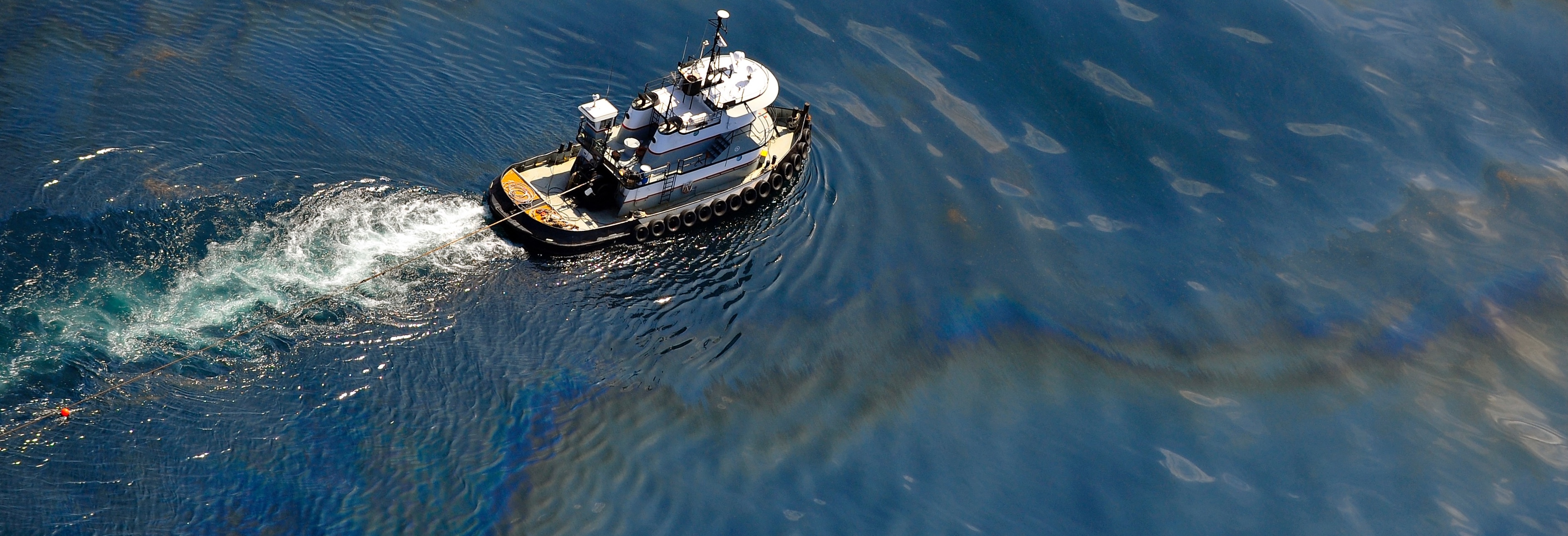
Exploring Potential Challenges of Oil Spill Research
 Fire on an oil platform in the open sea at night. Source: Shutterstock.
Date: Thursday, December 17, 2026
Time: 1:00 to 2:30 p.m. CT / 2:00 to 3:30 p.m. ET
Webinar Description
This session will explore the ethical, logistical, and legal challenges researchers may encounter when conducting oil spill research. Speakers will discuss the complexities of rapidly evolving spill conditions, barriers to site and data access, ethical considerations when working with affected communities, and the legal and institutional dynamics that can shape research efforts. The discussion will also examine the operational realities of oil spill response and recovery, including challenges related to research coordination, site access, safety, and collaboration across sectors. Drawing on lessons learned from major offshore oil spills, speakers will share practical insights for conducting rigorous, community-informed, and ethically grounded research in post-spill environments. Together, the panel will highlight the importance of preparedness, coordination, and researcher well-being in supporting effective oil spill research. The session will conclude with time for Q&A and discussion.
This webinar will be recorded and posted on the Natural Hazards Center website after the event. You can learn more about the Next Generation Oil Spill Researchers community of practice here. Please remember to sign up for future webinars and free resources here.
Speakers
Mandy Joye, University of Georgia.
Learning Outcomes
- Identify the ethical, logistical, and legal challenges that can arise when conducting oil spill research.
- Understand how rapidly evolving spill conditions, site access restrictions, and institutional dynamics can shape research efforts.
- Examine practical considerations related to researcher safety, coordination, and collaboration across sectors in post-spill environments.
- Explore promising practices for conducting community-informed and ethically grounded oil spill research.
Prepare Ahead
Additional Suggested Readings and Resources
- Addressing Challenging Situations in Field Research—CONVERGE Extreme Events Research Check Sheets Series
- CONVERGE Conducting Emotionally Challenging Research Training Module
- Institutional Review Board (IRB) Checklist for Human Subjects Research—CONVERGE Extreme Events Research Check Sheets Series
- What to Expect in Response to an Oil Spill: A Tip Sheet for Academic Researchers
The Next Generation Oil Spill Researchers Community of Practice is funded by the Gulf Research Program at the National Academies of Sciences, Engineering, and Medicine (Award #SCON-10001452). Opinions, findings, conclusions, or recommendations produced through this initiative are those of the authors and do not necessarily reflect the views of the Gulf Research Program or Natural Hazards Center.