NSF Enabling Program Cohort 6 Advisory Committee Board
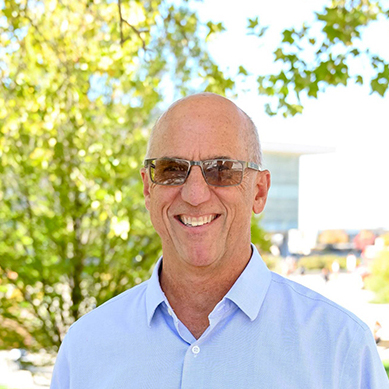
Tom Cova is professor of Geography at the University of Utah in Salt Lake City. His research and teaching interests are environmental hazards, emergency management, transportation, and geographic information science (GISci). His primary focus is wildfire evacuation analysis and planning, and he has published on a variety of topics in many leading hazards, transportation and GIScience journals. He served as Chair of the GIS Specialty Group and Hazards, Disasters & Risks Specialty Group of the Association of American Geographers (AAG). In 2008, he served as Program Chair for the International Conference of Geographic Information Science (GIScience '08) held in Park City, Utah. He teaches courses on environmental hazards, human geography, emergency management, and GIS.
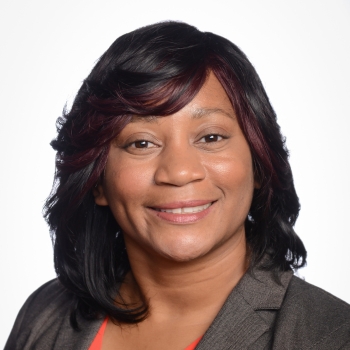
Terri R. Norton is the academic associate dean and professor of civil & environmental engineering at Bucknell University. Norton’s technical expertise is in the area of structural dynamics and structural vulnerability. Her research interests involve evaluating the effects of hazards on civil structures, debris management, and disaster reconstruction. She served as a Fulbright Research Scholar in Japan for her research on debris management and reconstruction following the 2011 Great East Japan Earthquake and Tsunami. She has been an invited lecturer and visiting scholar at the University of Rome “La Sapienza” in Italy, the University of Tokyo, and Tohoku University International Research Institute of Disaster Science in Japan. Norton also served as an invited member of the National Academies of Sciences, Engineering, and Medicine Resilient America Roundtable, a founding leader of the William “Bill” Anderson Fund (BAF), and the Earthquake Engineering Research Institute (EERI) Vice President and a Board Member, leading the DEI strategic initiatives group and supporting the programs committee and the finance and budget committee.
Norton has served as PI on numerous grants and has been a member of several post-disaster reconnaissance teams, including the Molise Earthquake (2003), Hurricane Charley (2004), GEJET Societal Dimensions (2011), Hurricane Harvey (2017), and Hurricanes Irma and Maria (2017). She is also a past fellow of the NSF Enabling the Next Generation of Hazards and Disasters Researchers program.
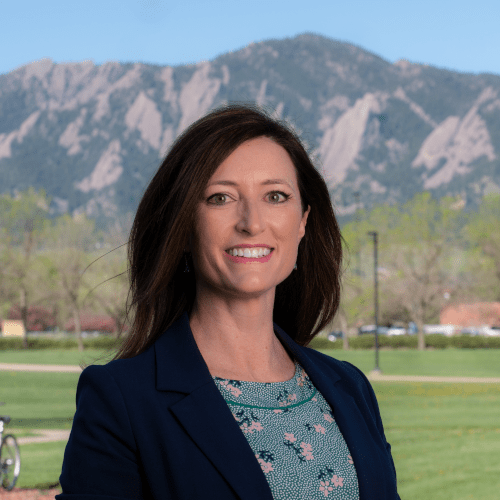
Lori Peek is director of the Natural Hazards Center and professor in the Department of Sociology at the University of Colorado Boulder. She is recipient of the Fred Buttel Distinguished Contribution Award for Environmental Sociology. She wrote the award-winning book Behind the Backlash: Muslim Americans after 9/11, co-edited Displaced: Life in the Katrina Diaspora and the Handbook of Environmental Sociology, and co-authored Children of Katrina and The Continuing Storm. Peek also helped develop and write school safety guidance for the nation, which resulted in the publication of FEMA P-1000, Safer, Stronger, Smarter: A Guide to Improving School Natural Hazard Safety. In 2021, she was nominated by President Joseph Biden and approved by the U.S. Senate to serve on the Board of the National Institute of Building Sciences.
Peek’s research is currently funded by the National Science Foundation, U.S. Geological Survey, Andrew A. Mellon Foundation, and Margaret A. Cargill Philanthropies. She has conducted field investigations in the aftermath of several major disasters and recently testified before members of the U.S. Congress on the topic of Ensuring Equity in Disaster Preparedness, Response, and Recovery. Peek is the principal investigator for the NSF-funded CONVERGE facility, which is dedicated to improving research coordination and advancing the ethical conduct and scientific rigor of disaster research. She also leads the NSF-supported Social Science Extreme Events Research (SSEER) and Interdisciplinary Science and Engineering Extreme Events Research (ISEEER) networks. Peek is co-principal investigator for an NSF-effort focused on advancing interdisciplinary methods and approaches for hazards and disaster research. She is also co-leading a U.S. Geological Survey funded project on earthquake early warning systems in schools, and she is principal investigator for a recently funded project on reducing social vulnerability to disasters.
Her work has appeared in a variety of scholarly outlets including Nature, Journal of the American Medical Association (JAMA), Child Development, Sociological Inquiry, Qualitative Research, and Disasters, among others. In 2021, she and Mithra Moezzi received the Best Paper Award from Risk Analysis. In 2016, Peek received honorable mention for the Leo Goodman Award for Outstanding Contributions to Sociological Methodology from the American Sociological Association Section on Methodology. And in 2009, the American Sociological Association Section on Children and Youth honored her with the Early Career Award for Outstanding Scholarship.
In addition to the recognition for her scholarship, Peek has received nearly a dozen awards for her teaching and mentoring. Notably, she received the 2016 Board of Governor's Excellence in Undergraduate Teaching Award, which is the highest teaching honor bestowed at her former institution, Colorado State University. Peek regularly works with graduate and undergraduate research and teaching assistants, and has mentored numerous postdoctoral scholars and doctoral, master's, and undergraduate advisees throughout her career. She was recognized with the Outstanding Postdoctoral Mentor Award at the University of Colorado Boulder in 2019. Peek regularly teaches a 400-student large lecture Introduction to Sociology class.
Peek is the past President of the Research Committee on Disasters for the International Sociological Association and is past Chair of the American Sociological Association Section on Environmental Sociology. She served as co-PI for the NSF INCLUDES Minority SURGE Capacity in Disasters project, and is a Board Member for the William Averette Anderson Fund; both initiatives are dedicated to increasing the number of people of color in hazards and disaster research and practice. She served as an appointed member of the National Academies Resilience Roundtable, a member of the oversight committee for the Mitigation Saves 2.0 study, and a federally-appointed member of the Advisory Committee on Earthquake Hazards Reduction (ACEHR) for the National Earthquake Hazards Reduction Program (NEHRP).
Peek earned her B.A. in Sociology from Ottawa University in her home state of Kansas, M.Ed from Colorado State University, and Ph.D. in Sociology from the University of Colorado Boulder. She was a research assistant at the Natural Hazards Center from 1999-2005, and a faculty member in Sociology at Colorado State University from 2005-2016. She returned to the University of Colorado Boulder in 2017.
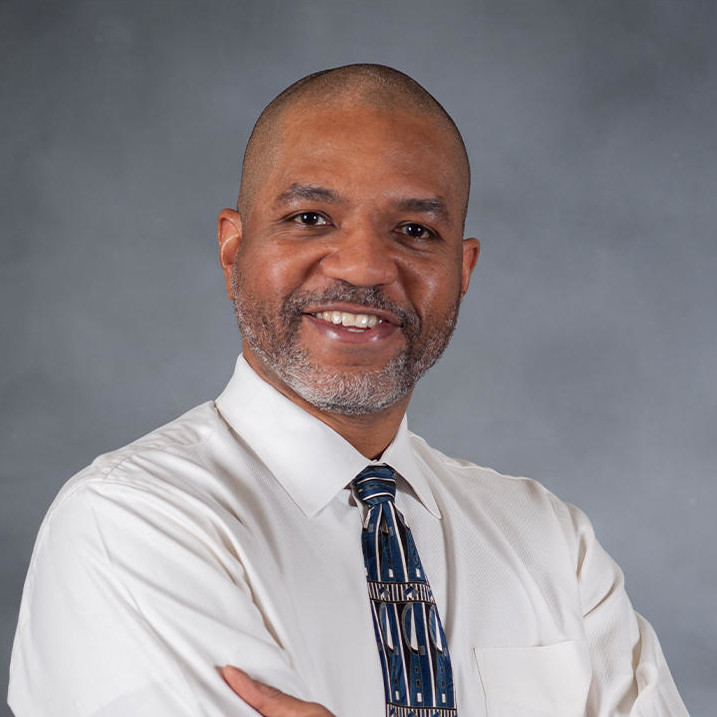
Eric Tate is a geographer and Professor of Public Affairs at the Princeton School of Public and International Affairs, where his research focuses on intersections of floods and social vulnerability. His work integrates spatial analysis, vulnerability modeling, risk assessment, and uncertainty modeling to examine the interplay of environmental hazards, social inequity, and disasters. Tate’s most cited research includes foundational studies on social vulnerability indices, flood risk, and community resilience. His research has been supported over the years by the National Science Foundation, Department of Housing and Urban Development, The Nature Conservancy, Federal Emergency Management Agency, and National Aeronautics and Space Administration. In the classroom, Prof. Tate teaches courses on hazard and disaster policy, environmental justice, and water resources.
Through professional service, Dr. Tate has helped shape national policy and research conversations on social inequity in flood exposure and disaster recovery. He currently serves on the Board of Directors of the non-profit Anthropocene Alliance and as chapter lead for Risk and Resilience in the Third Assessment of Natural Hazards. At the National Academies of Sciences, Engineering, and Medicine, he is a member of the Gulf Environmental Protection and Stewardship Board, and previously served on consensus study committees that produced the reports Constructing Valid Geospatial Tools for Environmental Justice and Urban Flooding in the United States. Tate also served for years at the National Academies on the Resilient America Roundtable and the Geographical and Geospatial Sciences Committee. At the US Global Change Research Program, Tate served as a co-author of the Adaptation Chapter of the Fifth National Climate Assessment.
Tate holds a Ph.D. in Geography from the University of South Carolina, an M.S. in Environmental and Water Resources Engineering from the University of Texas at Austin, and a B.S. in Environmental Engineering from Rice University. Prior to joining Princeton, Dr. Tate was an Associate and Assistant Professor in the Department of Geographical and Sustainability Sciences at the University of Iowa. His academic career is grounded in applied experience: before academia, he worked for over a decade in environmental engineering consulting, including roles at Weston Solutions, ABS Consulting, and Lenocker & Associates, where he developed software and conducted risk assessments for toxic pollution and natural hazards.
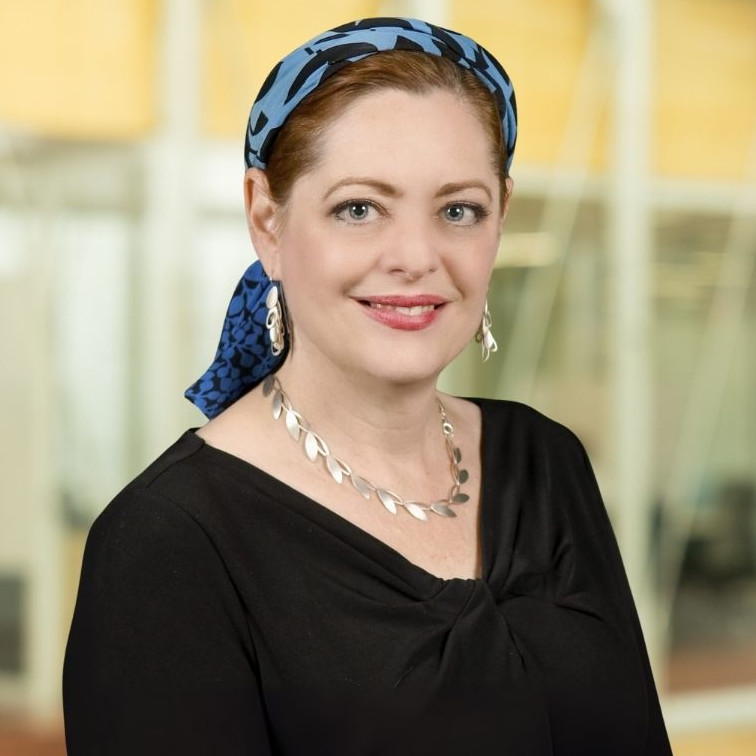
Deborah S.K. Thomas is the Associate Vice Chancellor of Research and Professor of Geography at the University of North Carolina at Charlotte. In this role, she oversees operations and special initiatives for research and innovation across the university. Her research focuses on disasters and environmental health with more than 25 years of experience in the social science application of geographic information science & technology (GIS&T). She was a Fulbright Scholar to Middle East Technical University in Ankara, Turkey in 2005, and continues to work in global environmental health in Tanzania as part of a 15-year partnership with the Catholic University of Health and Allied Sciences in Mwanza, Tanzania.
She specializes in hazards and health geography with more than 25 years of experience in the social science application of geographic information science & technology (GIS&T). Her teaching & research interests focus on issues of vulnerability/resilience/equity as they relate to natural and human-induced hazards and public health, commonly emphasizing the role of technology, particularly GIS, in assessing and evaluating the intersection of human-physical systems and the built environment. Around these themes, she has taught many classes at all levels, mentored undergraduate, master’s and PhD students, published in numerous journals, and is co-editor of a book entitled Social Vulnerability to Disasters. In July 2020, she completed three years on the American Association of Geographers (AAG) National Council and was Treasurer and a member of the Executive Committee of the organization for the last two of those years. Along with US-based activities, She was a Fulbright Scholar to Middle East Technical University in Ankara, Turkey in 2005. She continues to work in Tanzania as part of a 13-year partnership with the Catholic University of Health and Allied Sciences in Mwanza, Tanzania.