NSF Enabling Program Cohort 6 Leadership Team
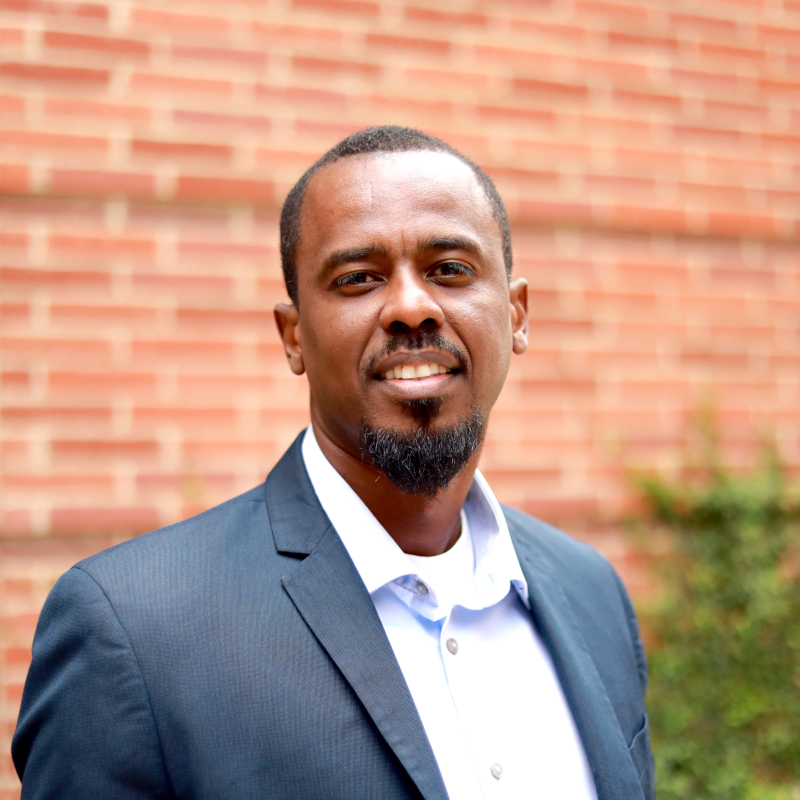
Henry V. Burton, is an Associate Professor and the Presidential Chair in Structural Engineering at the Department of Civil and Environmental Engineering at the University of California, Los Angeles (UCLA). His research seeks to understand and model the relationship between the performance of the built environment, and the ability of communities to minimize the extent of socioeconomic disruption following extreme events. His group integrates advanced computational modeling and probabilistic methods to assess the performance and recovery of buildings and other distributed infrastructure after extreme events. His research has informed seismic risk and resilience initiatives at the local, state, and national levels, including collaborations with organizations such as the National Institute of Standards and Technology, the Applied Technology Council and the National Academies of Sciences, Engineering, and Medicine.
Henry has published more than 100 peer-reviewed articles in leading journals such as Earthquake Spectra, ASCE Journal of Structural Engineering, Structural Safety, Earthquake Engineering and Structural Dynamics, and Engineering Structures. His research has been supported by several agencies, including the National Science Foundation, the United States Geological Survey, the Pacific Earthquake Engineering Research Center, and the California Seismic Safety Commission. He has also developed widely used open-source computational tools and data for probabilistic seismic design and risk assessment of buildings.
At UCLA, Henry teaches undergraduate and graduate courses in structural analysis, structural reliability, and performance-based earthquake engineering. He has advised numerous Postdoc, PhD, MS, and undergraduate researchers, many of whom have gone on to careers in academia and industry. In addition to his teaching and research activities, he is active in professional service and leadership roles, including editorial positions with several leading engineering journals and participation in national committees focused on infrastructure resilience and risk mitigation.
Henry was a Fellow in the fourth round of the National Science Foundation’s Enabling the Next Generation of Hazards and Disasters Researchers program and later served as a Mentor in a subsequent round. He currently serves on the program’s leadership team as a Co-Principal Investigator, helping to mentor early-career scholars working at the intersection of hazards, disasters, and risk.
Who is Henry and how can he help me?
Henry is collaborative, approachable, and committed to mentoring early-career scholars. He enjoys working with researchers who are interested in interdisciplinary approaches to hazards and disasters, especially at the intersection of engineering, data science, and policy. He can provide guidance on developing competitive research proposals, publishing interdisciplinary research, building collaborative research teams, and navigating career development in academia and engineering research.
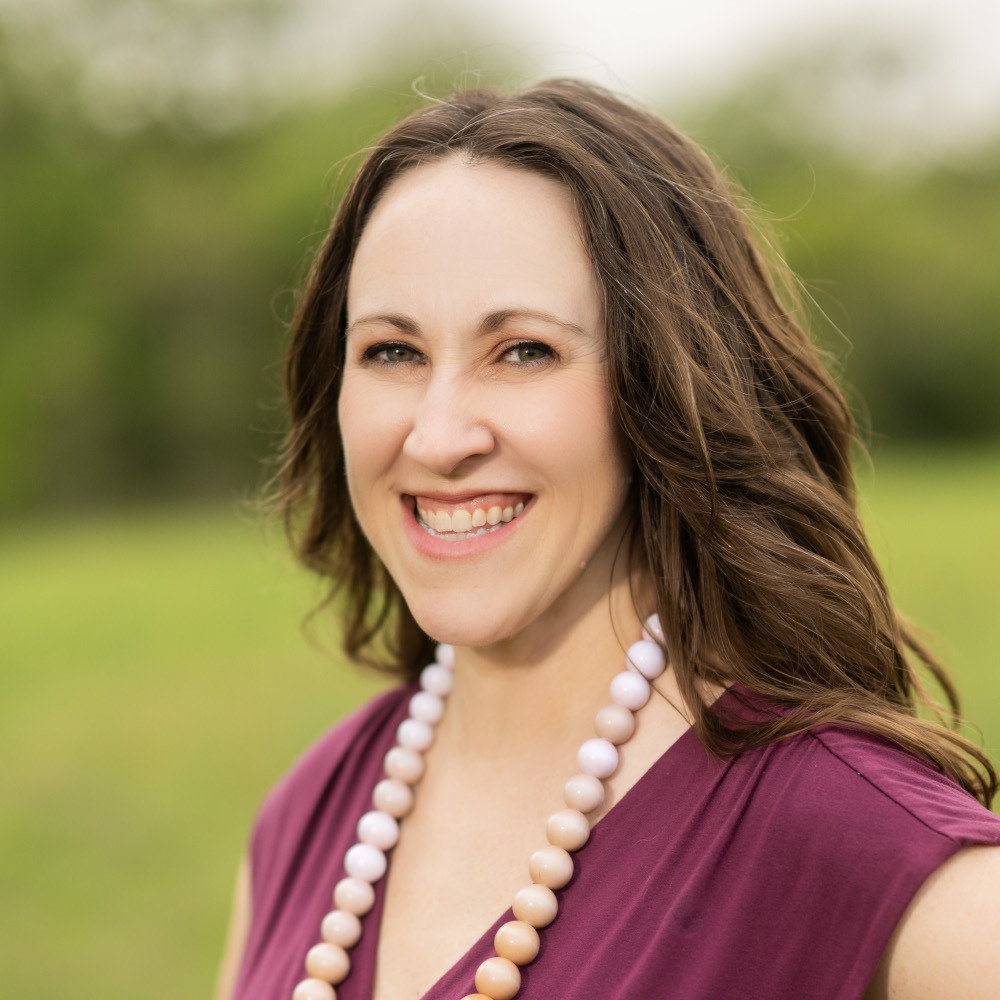
Michelle Annette Meyer is the Director of the Hazard Reduction and Recovery Center and an Associate Professor in the Landscape Architecture and Urban Planning Department at Texas A&M University. She received her Ph.D. from the Department of Sociology at Colorado State University (CSU). She earned her BA from Murray State University in Murray, KY and her MA from CSU.
Michelle’s research interests include disaster recovery and mitigation, environmental and community sustainability, and the interplay between environmental conditions and social vulnerability. Particularly, Michelle studies inequality and how disaster and environmental settings intersect with structural forces that maintain or transform inequality. She uses the lens of social capital and collective efficacy to theoretically understand how relationships between individuals and between governmental and nongovernmental organizations generate or hinder disaster risk and recovery. Hence, her interests have led her to research expansively on volunteer organizations, volunteerism, and philanthropy in disaster. Michelle has worked on various research projects including disaster risk perception, social capital in disaster resilience, nonprofit collaboration for disaster recovery, organizational energy conservation, volunteer training program evaluation, evaluation of disaster response plans for individuals with disabilities, social media use among vulnerable populations, how to increase protective action knowledge in Haiti, citizen science protocols for measuring storm-water condition equity, and environmental attitudes and behaviors. She has conducted research in Florida, Louisiana, Texas, Colorado, New York, California, Sri Lanka, and Haiti. As well as survey research throughout the Gulf and Atlantic coastlines and in Peru, India, and Turkey. She regularly teaches courses on research methods and disaster management. She has worked with 30+ undergraduates on research projects, who are often first generation students. Michelle aims to generate research that contributes to communities’ capacity to be resilient in the face of environmental threats, and do so in an equitable manner. Thus, she regularly collaborates with nonprofit organizations on applied research.
Michelle has received approximately $37.9 million in external research funding, of which $19.4 million as PI or institutional PI. Her research has been funded by the National Science Foundation, including through a NSF CAREER Award in 2020, National Institutes of Sciences, Engineering, and Medicine Gulf Research Program, National Institute of Standards and Technology, U.S. Department of Energy, NOAA, as well as in applied projects with partner organizations such as the American Planning Association and the National Voluntary Organizations Active in Disasters. In her role as director of a research center, she regular supports scholars in proposal development and research team coordination.
Michelle has published 45 articles in journals such as Journal of the American Planning Association, Journal of Planning Education and Research, Nonprofit and Voluntary Sector Quarterly, Organization and Environment, International Journal of Disaster Risk Reduction, Risk Analysis, Disasters, International Journal of Mass Emergencies and Disasters, among others.
Michelle has taken on several service roles in the field. She has led the Annual Researchers Meeting at the Natural Hazards Workshop. She currently serves as Associate Editor for the International Journal of Mass Emergencies and Disasters. She has contributed time to NSF proposal panels and reviews as well as proposal reviews for the Gulf Research Program, American Sociological Association, and Sea Grant. She regularly mentors graduate students, early career faculty, and postdocs.
Learn more here: https://michelleameyer.weebly.com/
Who is Michelle and how can she help me?
Michelle is a first generation college student and a new mom to a toddler. She is diligent about maintaining focus and time for life outside work. She can provide advice in grant writing, including a successful CAREER proposal, in contributing to interdisciplinary teams, in incorporating qualitative research into larger teams, in contributing to the field through research centers, and in describing your work for tenure and promotion.
Abdul-Akeem Sadiq is a professor and the director of the Master of Public Policy program in the School of Public Administration at the University of Central Florida. He received his joint PhD in Public Policy from Georgia State University and Georgia Institute of Technology in 2009. Sadiq’s research focuses on organizational disaster preparedness and mitigation, risk perceptions of man-made and natural hazards, community resilience to floods, collaborative governance, and human trafficking. In 2014, Sadiq was awarded the National Science Foundation (NSF) Enabling the Next Generation of Hazards and Disasters Researchers Fellowship (the Enabling Program), and six years later he was selected to mentor two Next Gen fellows. Sadiq has received multiple grants from NSF. For example, in 2016, as PI, he was awarded an NSF grant (with another colleague) to study community resilience to floods and in 2025, he received a grant to implement the sixth round of the Enabling Program (as PI with three Co-PIs).
Sadiq has published 57 peer-reviewed articles, one book, and several book chapters. His publications have appeared in several top journals including Ecological Economics, Risk Analysis, Public Administration Review, Nonprofit Voluntary Sector Quarterly, Natural Hazards, and Natural Hazards Review. Sadiq has over a decade of teaching experience both at the undergraduate and graduate levels. His teaching interests include Public Administration, Emergency Management, Homeland Security, Public Policy, Terrorism, and Public Safety.
Sadiq is a fellow of the National Academy of Public Administration and the past chair of American Society for Public Administration (ASPA) Section on Emergency and Crisis Management. He is a member of NASPAA Policy Issues Committee. Sadiq is a member of Pi Alpha Alpha Steering Committee, the chair of the Honorary Membership Committee and the Vice President for International Expansion. He is also the past co-chair of NASPAA’s Emergency Management and Homeland Security section, and past President and Vice President of ASPA Central Florida Chapter. Sadiq is an associate editor for Public Works Management and Policy, and a member of the editorial boards of International Journal of Public Administration, Journal of Public Affairs Education, and Water.
Who is Abdul-Akeem and how can he help me?
I am friendly, approachable, empathetic, and collegial. I can help you understand how to maintain a work-life balance and promotion and tenure issues. I can also provide you with strategies on how to write peer-review publications and grants, and provide advise on career-related issues.
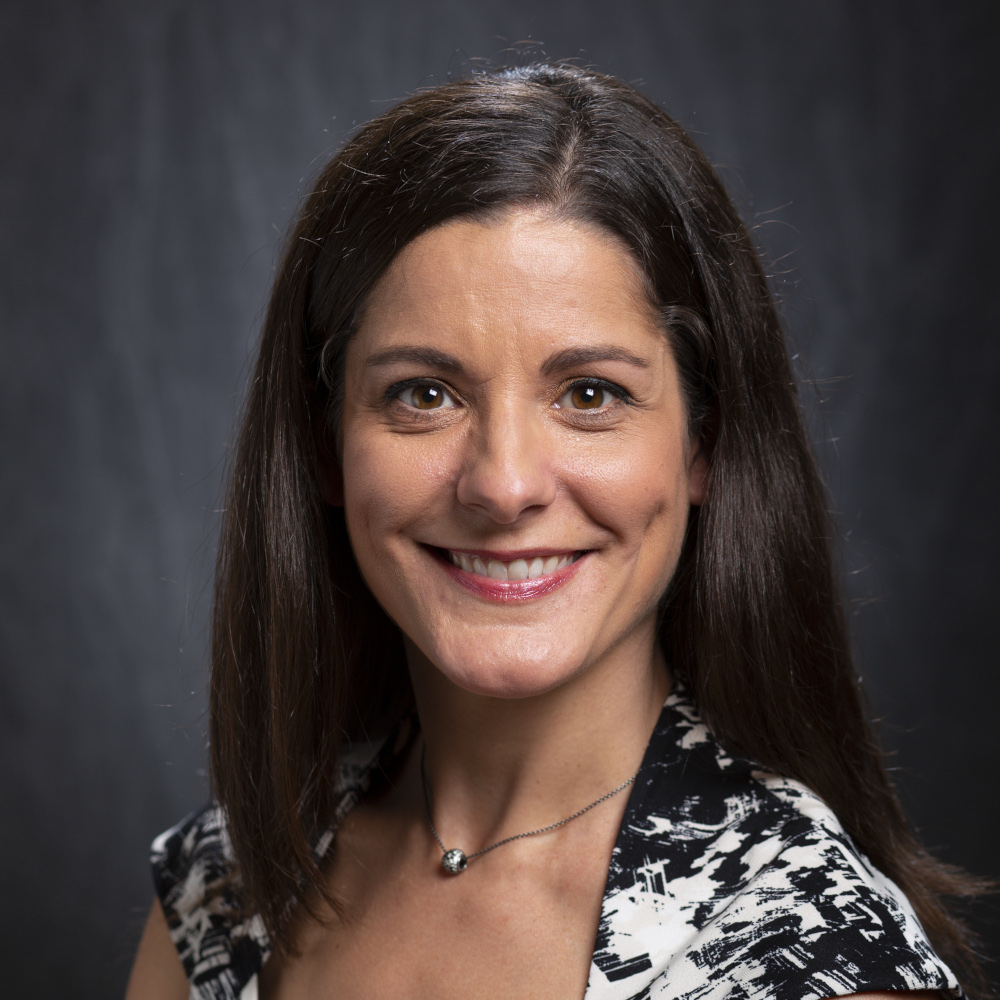
Jill Christine Trepanier (formerly Malmstadt) is a Professor of Geography and the Department Chair in the Department of Geography and Anthropology at Louisiana State University in Baton Rouge, Louisiana. She received her Ph.D. (2012) and M.S. (2009) in Geography from the Department of Geography at Florida State University in Tallahassee, Florida. She earned her BA (2007) in Geography from the University of Wisconsin-Oshkosh in Oshkosh, Wisconsin.
Jill is a physical geographer trained in climatology, applied meteorology, and statistics. Her specific interests lie in understanding the spatial and temporal behavior of the most severe atmospheric events in a changing climate and how those events will impact a given population. Her research incorporates observational data from a variety of sources (e.g., HURDAT2, weather stations, commercial lightning networks); spatial, temporal, and statistical approaches; and geographic information systems (GIS). Much of her research takes an Earth systems approach and recognizes the interconnectedness of earth processes, while also considering the influence on human population. Much of her early work focuses on the statistical assessment of risk in different area while indirectly describing the impacts on a population or environment. More recently, her work takes a more directed approach, involving impacted stakeholders directly in the model design and implementation. Recent areas of research include the 1) establishment of a small weather station network throughout South Louisiana at K-12 schools, 2) creation of a climate extreme threat scale for galleries, libraries, archives, and museums (GLAMs) using an advisory board for input and GIS for dissemination, and 3) climate assessment for local fisheries, small-area farmers, and culturally sensitive heritage sites for the Chitimacha Tribe. She has advised students from freshmen level through to completing PhD students, through classroom environments specifically tailored to incoming college students to formal PhD/MS advisership within the Department.
Jill has received $4,000,000 in funding since 2012 as part of fourteen separate projects. Those most recent are a Mellon Foundation Grant focused on her GLAM project following an Institute of Museum and Library Services Grant with Dr. Ed Benoit in the School of Information Studies at LSU and three separate USGS funded projects with Dr. Kory Konsoer, Stuart Nolan, and Dr. Sarah Franzen as lead PIs. She was made a Fellow in the National Academies of Science, Engineering, and Medicine Gulf Research Program in 2016.
Jill has published 43 articles in journals such as the Southeastern Geographer, Journal of Geophysical Research, Journal of Applied Meteorology and Climatology, Natural Hazards, The Professional Geographer, Journal of Coastal Research, International Journal of Climatology, the Bulletin of the American Meteorological Society, among others.
Jill has taken on many service roles in her time as an academic. Internally to LSU, she has served on the Departmental Assessment Committee and as the Director of Graduate Studies within the combined disciplinary department that hosts four graduate degree paths (MA and PhD in Anthropology and MS and PhD in Geography). She now serves as the Department Chair, and steers the department toward success through curricular development, degree pathway development, and revising and reshaping departmental protocol. She assists in cases of promotion and tenure, annual reviews, staff development and guidance, and many other areas of departmental activity. In the greater academic community, she serves as the Associate Editor of Earth Interactions (beginning in 2016) and was the Chair of the Status of Women in Geography Committee of the American Association of Geographers ending in 2022. She participates in various forms of media outreach, including written forms (i.e., written interviews, opinion education pieces), radio broadcasts, and television (both live and recorded).
Learn more here: https://www.lsu.edu/ga/people/faculty/jill-trepanier/index.php
Who is Jill and how can she help me?
Jill is a first-generation college student who relocated 1000 miles away from home (Milwaukee, Wisconsin) at the beginning of graduate school (2007). She is married with two pre-teen children, who she “manufactured” during her pre-tenure pursuit. During the pre-tenure process, and as Department Chair, she dedicates focus to maintaining a healthy work-life balance. She is happy to provide tips related, but not limited to maintaining that balance, grant and article preparation, collaboration in interdisciplinary teams, utilizing quantitative research to support social science and humanities approaches in natural hazards, and the pursuit to promotion and tenure. She’s an open book – feel free to ask about anything in shared professional world.