Risk Perceptions and Evacuation Decision-Making During Wildfire Events in Rural Texas
Publication Date: 2025
Abstract
This study explored rural residents’ wildfire risk perceptions and evacuation decision-making during the 2024 spring Texas wildfires. Through an online survey, we collected data from 318 rural Texas Panhandle residents about how they receive and process fire alerts and warnings and the factors that affected their evacuation decision-making and behaviors. Four major findings were identified. First, rural residents demonstrated a medium level of perceived knowledge about wildfires, but their levels of wildfire preparedness during the 2024 wildfires outbreak were low. Therefore, disaster preparedness programs are needed to better prepare rural residents for future wildfire disasters. Second, three factors influenced people’s evacuation intentions: age, risk perceptions, and exposure to disaster information during the 2024 wildfires. Third, the top three risk communication channels that people used to learn about wildfire information were television, social media apps, and personal networks. Finally, rural residents perceived two of these risk communication channels to provide the most credible information during emergencies: social media apps and governmental alerts. Thus, we recommend that disaster management specialists and agencies make better use of the channels that people trust in future disasters.
Introduction
Wildfire is a significant hazard in Texas where “no part of Texas is immune to wildfire” (Texas A&M Forest Service, n.d.1). The state experiences a range of wildfire events each year, with some causing significant damage to property and ecosystems. Effective fire management practices, including implementing preventive measures and increasing public awareness, play a crucial role in mitigating the damage caused by wildfires. In particular, timely communication and evacuation are critical aspects of wildfire preparedness and response (Remenick, 20182).
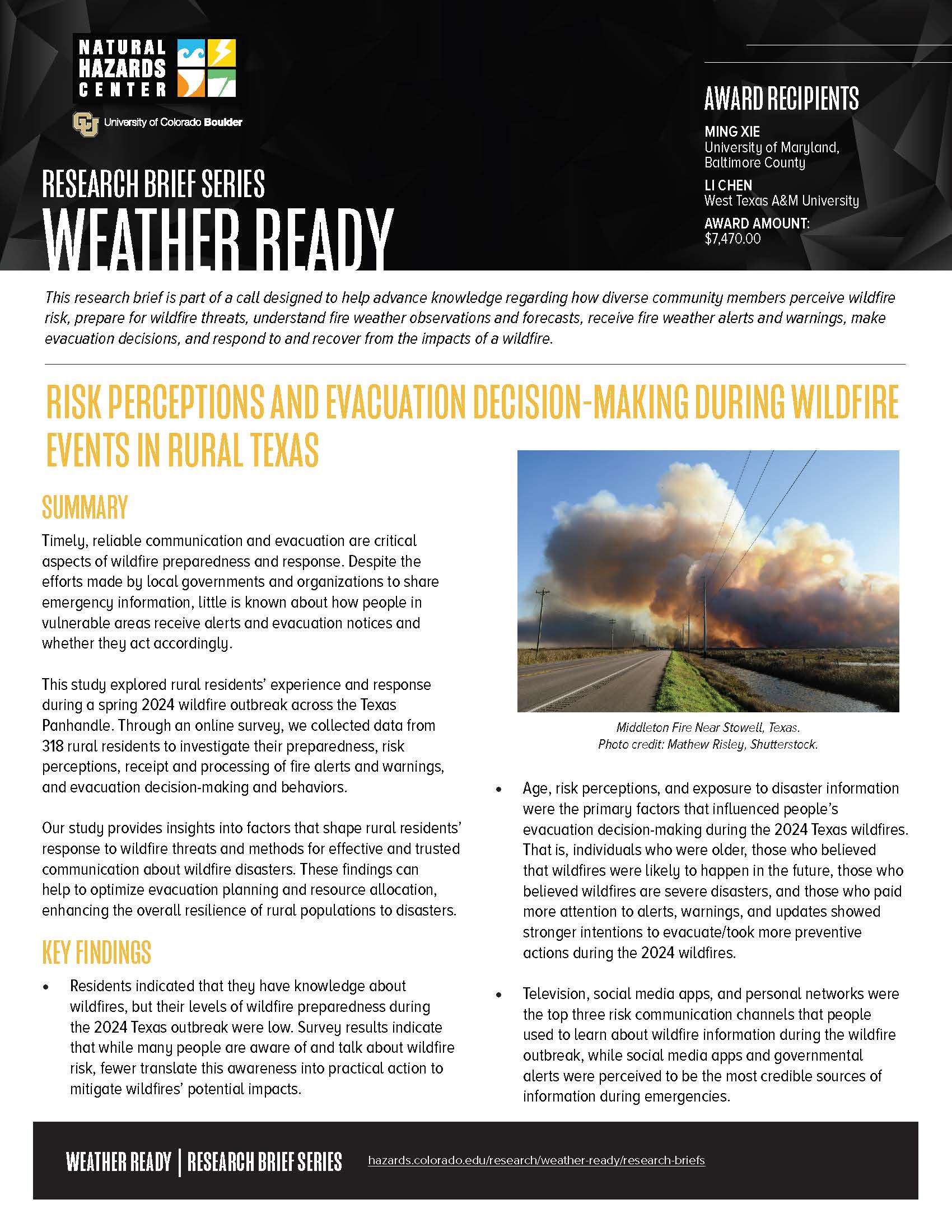
In late February and early March 2024, several wildfires, including the Smokehouse Creek Fire, Windy Deuce Fire, and Grape Vine Creek Fire, spread across multiple counties in the Texas Panhandle and Western Oklahoma, killing two people and thousands of livestock. The Smokehouse Creek Fire was the largest wildfire in Texas history (Cann, 20243). A disaster declaration for 60 counties was issued by Texas Governor Greg Abbott in response to the wildfires and evacuation orders were issued in affected towns. Local agencies like the Amarillo Office of Emergency Management posted timely updates regarding wildfire situations and evacuation information on their Facebook page.
Despite the efforts made by local governments and organizations, little is known regarding whether residents in the affected areas received the alerts and evacuation notices and acted accordingly. More importantly, most of the affected areas were rural, low-density residential areas with limited resources and infrastructure, which research has shown to impede risk communicators from effectively delivering their messages during a disaster (Stasiewicz & Paveglio, 20214). This study aimed to understand the unique challenges and vulnerabilities of rural Texas communities during wildfires by investigating local residents’ risk perceptions; receipt and processing of fire alerts and warnings; and evacuation decision-making and behaviors. The findings can help optimize evacuation planning and resource allocation, enhancing the overall resilience of rural populations to disasters.
Literature Review
Protective Action Decision Model
In this study, we adopt the Protective Action Decision Model (PADM) to analyze the factors that affect behavioral intentions to reduce risk and prepare. Focusing on the cognitive processes underlying protective action decision-making during disasters, the PADM model has been widely used to analyze how individuals perceive and respond to hazardous events or disasters (Lindell & Perry, 20125). PADM was initially conceptualized to address the gap in understanding how people make decisions to protect themselves during natural disasters (Lindell & Perry, 2012). The model emphasizes the role of environmental cues (e.g., warnings, media reports); social context (e.g., social networks, community norms); and personal factors (e.g., previous experiences, beliefs about risk) in shaping protective behaviors (Buylova et al., 20206; Lindell & Perry, 2012; MacPherson-Krutsky et al., 20237).
Environmental cues include characteristics and circumstances of the event and its relation to individuals (Toledo et al., 20188). Information or signals from the environment that indicate a potential threat—such as official warnings, media coverage, and visible signs of danger—can affect individuals’ perceptions and behaviors. For example, individuals who perceive higher risks are more likely to evacuate (Toledo et al., 2018). PADM posits that the clarity, consistency, and credibility of these cues significantly impact individuals’ decision-making processes (Heath et al., 20189; Silver et al., 202410).
Social interactions and community influences also play a crucial role in PADM. Individuals often look to family, friends, and community leaders for guidance on how to respond to threats. Social norms and the behaviors of others can either reinforce or undermine protective actions (Lindell & Perry, 2012). For example, research found that people were prompted by the preparedness activities of their friends, family, and neighbors to take similar actions (Silver & Behlendorf, 2023). Risk information sources, channel access, channel preference, and warning messages are also critical in shaping individuals’ decisions and behaviors (Heath et al., 2018).
In addition, personal beliefs, experiences, and demographics influence a person’s perceptions of risks and protective actions as well as decision-making. Risk perceptions refer to an individual’s perceptions of their susceptibility to, and the severity of, a hazard or threat (Buylova et al., 2020). Individuals who have previously experienced similar threats may respond differently compared to those with no prior experience (Buylova et al., 2020). Also, a study by Wei and colleagues (201711) found that homeowners were more likely to exhibit higher levels of risk perception than non-homeowners. Additionally, beliefs about personal vulnerability and the effectiveness of protective actions are critical (Lindell & Perry, 200412); they are also associated with the concept of perceived efficacy.
Perceived efficacy refers to an individual’s perceived ability to perform a preventive act (Skinner et al., 201513) and the perceived effectiveness of the protective actions in a given situation (Martin et al., 200914). During wildfire disasters, individuals are expected to perform a variety of acts, such as evacuating from their homes and finding a safe shelter. Especially in rural areas, communities often face unique challenges, such as limited access to emergency services, infrastructure constraints, and lower availability of information through formal communication channels (Kapucu et al., 201315; Ollerenshaw et al., 201616). Therefore, it is important to examine rural residents’ perceived efficacy in coping with wildfire disasters.
Overall, PADM emphasizes information sources; motives to acquire and interpret information; response planning; and pre-decision processes, such as exposure, attention, and comprehension (Heath et al., 2018; Silver et al., 202417). The model covers both the cognitive and behavioral dimensions of decision-making. To understand rural residents’ adoption of preventive and protective actions, this study examined three major PADM components: information seeking behavior, risk perception, and demographic characteristics.
Household Wildfire Preparedness
Wildfires pose significant risks to households in wildfire-prone areas. Preparedness at the household level is crucial for mitigating the impacts of wildfires. The literature indicates that household wildfire preparedness is multifaceted, and that effective preparedness requires a combination of awareness, planning, property protection, resource availability, and community engagement. Measuring household wildfire preparedness involves evaluating the extent to which households are able to prevent, respond to, and recover from wildfire events. These abilities depend on disaster awareness and knowledge; planning and preparation; property protection; resources and equipment; communication; community engagement; insurance; and training. Awareness and knowledge about wildfire risks are fundamental to preparedness. Studies show that households with higher wildfire risk awareness levels engage in more proactive mitigation behaviors (Martin et al., 2009; McCaffrey et al., 201318). Government agencies, media, and community programs can increase public awareness of a disaster through offering a variety of programs to inform people of the possibilities of disaster occurrence, alert people to the possible damages a disaster might cause, and emphasize the necessity of taking preventive action (Steelman & McCaffrey, 201319).
Planning and preparation are essential aspects of household wildfire preparedness, encompassing a range of activities and strategies that ensure households are ready to act quickly and efficiently in the event of a wildfire and reduce wildfire risks around homes. One of the critical components of this type of preparedness is having a clear and practiced evacuation plan. Research by Kulig et al. (201220) underscored the importance of evacuation plans, noting that households with well-defined and rehearsed plans are more likely to evacuate safely during a wildfire. Such plans typically include identifying multiple evacuation routes, understanding the timing of evacuations, and designating a meeting place for all household members.
In addition to evacuation plans, preparation of emergency kits with essential supplies is another key component of household wildfire preparedness. Cohn and colleagues (200621) highlighted that well-prepared households maintain emergency kits that are readily accessible and contain items necessary for survival during and after a wildfire. Emergency kits should be tailored to meet the specific needs of all household members, including pets. Regularly updating and checking these kits ensures that all items are in working order and that food and medical supplies are not expired.
Effective community engagement and communication are critical components of household wildfire preparedness. Community wildfire preparedness programs allow individuals to exchange information about disasters and build social networks to support each other in the event of a disaster, subsequently increasing both individual and household preparedness for disasters (McGee et al., 200922; Stephens et al., 202323). Collaborative efforts with neighbors, such as neighborhood fire drills, enhance collective resilience (Stephens et al., 2023). Programs such as Firewise Communities and neighborhood fire-safe councils encourage residents to collaborate on creating defensible spaces (an area strategically designed between one’s house and the surrounding area to slow the spread of wildfire and protect their properties), conducting joint firebreaks, and sharing resources (Jakes & Sturtevant, 201324). This collective effort not only increases the effectiveness of individual preparedness measures, but can also foster a sense of shared responsibility and mutual support among community members. Community engagement is facilitated through communicative activities such as information campaigns and workshops that can be conducted by various social institutions, including governmental agencies, nonprofit organizations, schools, and businesses (Ryan et al., 202025). Communication plays a pivotal role in ensuring that households receive timely and accurate information during wildfire events. Enrollment in local emergency alert systems, such as text message notifications and community sirens, is essential for prompt evacuation (Lindell & Perry, 2012).
Existing literature has provided profound insights into wildfire preparedness from various aspects. Nevertheless, not much research focused on rural residents’ preparedness or communication activities during wildfire disasters. Compared to urban residents, rural residents are even more vulnerable to wildfire disasters due to the limited resources and infrastructure available for disaster communication, which requires additional efforts to explore their wildfire mitigation behaviors (Stasiewicz & Paveglio, 2021). Research is needed to understand rural residents’ disaster preparedness and communication in order to develop tailored communication plans targeting this population.
Evacuation Decision-Making and Behaviors During Wildfires
Scholars have applied the PADM (Lindell & Perry, 2012) to the wildfire context and investigated the factors that influence evacuation decision-making during wildfires (Xu et al., 202326). Factors such as prior experience, awareness, income, physical fire cues, and warnings from trusted sources impact risk perceptions and influence evacuation decision-making (Kuligowski et al., 202027; McLennan et al., 201528; Xu et al., 2023). The presence of strong social and community ties also impacts evacuation decision-making. For example, McLennan and colleagues (2015) suggested that community connections influenced one’s decision to stay and defend themselves rather than evacuating. Similarly, McCaffrey and colleagues (201829) found that people who perceived a greater likelihood that a wildfire would threaten their family’s health and safety were more inclined to remain on their property and attempt to defend it, rather than evacuating, suggesting that concerns for loved ones can motivate shelter-in-place decisions. However, other studies also found that people were more likely to consider preparation due to their attachment to place and engagement with other members of the community (Prior & Eriksen, 201330). In terms of demographic variables, studies found that higher-income households and households with children were more likely to evacuate (McLennan et al., 201231; Paveglio et al., 201432), while a study by Mozumder and co-authors (200833) found that longer-term residents were more likely to stay if they perceived their property as safe.
During a wildfire event, individuals seek timely information. Santana and colleagues (202134) suggested that real-time personalized data on wildfire conditions might increase risk perceptions and protective actions. Emergency management specialists and agencies are expected to serve as credible information sources to provide sufficient and consistent information to help individuals cope with the ongoing disaster. Despite acknowledging the prominent roles of timely, reliable information in helping cope with a disaster, not much research has focused on individuals’ information acquisition during a wildfire disaster. Similarly, little is known about what communication channels are the most trusted during a disaster. To address these research gaps, this study examined rural residents’ information acquisition during the 2024 wildfire disaster and sought to understand what communication channels residents perceived as the most credible.
Research Questions
This study sought to answer these overarching research questions:
- What are rural residents’ current levels of wildfire preparedness?
- What factors affect rural residents’ decisions to take preventive actions such as evacuation?
- What are effective ways to communicate with rural residents during wildfire disasters?
- During the 2024 Texas wildfire disaster, how did rural residents in the Texas Panhandle respond to different types of fire alerts and warnings?
- What risk communication channels do rural residents in the Texas Panhandle perceive as credible?
Research Design
Research subjects included 318 individuals aged 18 years or older who live in rural areas of the Texas Panhandle. We focused on areas that were affected by the 2024 spring Texas wildfires, such as Amarillo, Fritch, Borger, Sanford, and Canadian.
Study Site and Access
Between 1973 and 2022, the number of fire weather days in the Texas Panhandle increased by 32 days, the sharpest increase in the United States (Foxhall, 202435). The Texas Panhandle’s low humidity, strong winds, and vegetation make it extremely susceptible to wildfire risks. Furthermore, it is a rural area dominated by agriculture and is the nation’s largest cattle-feeding region. Rural populations are particularly vulnerable to wildfire disasters for several reasons. First, rural areas are often closer to wildland vegetation and are more susceptible to extreme weather conditions, which increases the likelihood of wildfires spreading. Also, rural areas typically have limited infrastructure and fewer firefighting resources compared to urban areas, which can hinder local communities’ abilities to respond and contain wildfires effectively. Finally, even though mobile media technologies, especially smartphones, have reduced the digital gap between urban and rural (Yan & Schroeder, 202036) and between high- and low-income populations (Tsetsi & Rains, 201737), it remains unclear to what extent rural residents can obtain the risk information they need. Researchers argue that mobile technologies have reduced digital gaps mainly because technology adoption rates between urban and rural residents are similar (Tsetsi & Rains, 2017; Yan & Schroeder, 2020). However, adopting mobile phones does not guarantee that rural residents receive reliable risk communications nor is it evidence that rural residents are confident in using their mobile devices to acquire risk information. Therefore, we find it worthwhile to study rural residents’ risk information acquisition to identify the most effective channels and methods to communicate with rural residents about wildfire risks in the future.
Sampling Strategy and Survey Distribution
Survey participants were recruited using the survey platform Centiment’s online panel. Centiment allows researchers to specify zip codes from which to recruit survey participants. We requested zip codes corresponding to towns and cities within the Texas Panhandle—such as Amarillo, Borger, Fritch, and Sanford. We recruited survey participants from May 10 to 30, 2024. The survey was hosted on Qualtrics. Centiment sent out anonymous links to its online panel of pre-recruited individuals who agreed to participate in surveys. We received 431 responses. After removing incomplete and invalid responses, 318 valid responses remained.
Survey Measures
Here we describe the major variables in our survey. The full survey instrument is available in the appendix . We measured participants’ wildfire preparedness using two constructs: (a) preventive actions taken by participants during the 2024 wildfires and (b) participants’ future wildfire awareness. For preventive actions construct, we adopted the model of McCaffrey and Winter (202238) and listed seven preventive actions—such as “keep updated with the information of the wildfire situation and governmental recommendations” and “talk to my friends/neighbors about the threat of wildfires”—and asked to respondents to select all that applied. For the wildfire awareness construct, participants were asked to indicate to what extent they agreed with the statements about wildfire risk in their community and their preparedness for future wildfire events (e.g., “I have assessed the wildfire risk to my house/apartment”). The answers ranged from 1 (“strongly disagree”) to 5 (“strongly agree). In our data analysis, we further divided this variable into two constructs: knowledge about wildfires (“know”) and planning activities (“do”). Knowledge about wildfires included seven questions, such as “I am aware of the sorts of weather that can produce bad fire days and keep an eye on weather forecasts.” Planning activities included nine questions, such as, “I have an emergency kit prepared if a wildfire threatens.”
Risk perceptions assessed participants’ perceived likelihood of future wildfires and perceived severity of wildfires. We measured it using seven questions (e.g., “another wildfire will occur in the near future”), each of which used a five-point scale ranging from 1 (“very unlikely”) to 5 (“very likely”). Table 1 shows the descriptive results of the aforementioned variables.
Table 1. Scale Reliability, Mean, and Standard Deviation Scores of Major Variables
| Wildfire Awareness Construct 1: Knowledge About Wildfires (“Know”) | |||
| Wildfire Awareness Construct 2: Planning Activities (“How”) | |||
| Wildfire Awareness (Construct 1 + 2) | |||
| Risk Perceptions |
We also assessed disaster communication by asking participants about the communication channel they were using when they first learned about the outbreak of wildfires. In addition, we asked them about how much attention they paid to each communication channel for alerts, warnings, and updates, as well as their perceptions of each channel’s trustworthiness and level of expertise.
Participant Consent
When participants clicked the anonymous survey link provided by Centiment, they were presented with an introduction page outlining the purpose of the study. Participants were informed that their participation in the survey was entirely voluntary, and they could choose to withdraw from the survey at any time without negative consequences. It was clearly stated that all responses would be kept confidential. Participants were assured that their individual responses would not be identifiable or linked to their personal information. To proceed with the survey, participants clicked the button that said “I consent” to start the survey. Participants received a compensation in the amount of $5.00 from Centiment with the completion of the survey.
Sample Demographics
The participants were from various cities and counties in the Texas Panhandle, such as Amarillo, Borger, Fritch, and Sanford, with a mean age of 42.87 years. Participants had been living in the Texas Panhandle for an average of 26.34 years. The average household size was 2.78 people. Gender distribution skewed towards women: 62.9% of respondents were women and 36.8% were men. Education levels varied, with the majority having completed high school/equivalent (32.7%), or some college/associate degree (30.2%). Income distribution showed that more than half of participants (58.5%) earned less than $49,999 annually. Nearly half of the participants (47.2%) were homeowners, while 44.4% were renters. Employment status varied, with 41.8% employed full-time and 39.9% not employed. A smaller portion of individuals (18%) reported having disabilities or impairments that might affect one’s ability to respond to emergencies. Table 2 displays the descriptive statistics of these demographic variables.
Table 2. Select Demographic Characteristics of Survey Participants
| M | SD | Min | Max | |
|---|---|---|---|---|
| Age (years)a | 42.87 | 14.71 | 18 | 81 |
| Number of years living in the Texas Panhandleb | 26.34 | 19.00 | < 1 | 79 |
| Household sizec | 2.78 | 1.42 | 1 | 9 |
| Genderd | n | % | ||
| Male | 116 | 36.8 | ||
| Female | 198 | 62.9 | ||
| Other | 1 | 0.3 | ||
| Educationd | ||||
| Less than high school | 15 | 4.8 | ||
| High school or GED | 103 | 32.7 | ||
| Some college education | 95 | 30.2 | ||
| Two-year associate's degree | 34 | 10.8 | ||
| Four-year bachelor's degree | 40 | 12.7 | ||
| Master's degree | 20 | 6.3 | ||
| Professional degree | 4 | 1.3 | ||
| Doctoral degree | 4 | 1.3 | ||
| Annual Household Incomee | ||||
| Less than $25,000 | 87 | 28.0 | ||
| $25,000- $49,999 | 95 | 30.5 | ||
| $50,000- $74,999 | 48 | 15.4 | ||
| $75,000- $99,999 | 28 | 9.0 | ||
| $100,000- $149,000 | 25 | 8.0 | ||
| $150,000 or more | 13 | 4.2 | ||
| Prefer not to say | 15 | 4.8 | ||
| Household Compositione | ||||
| Single person | 67 | 21.5 | ||
| Couple without children | 53 | 17.0 | ||
| Couple with children | 77 | 24.8 | ||
| Single parent with children | 40 | 12.9 | ||
| Extended family | 38 | 12.2 | ||
| Roommates | 17 | 5.5 | ||
| Group home | 3 | 1.0 | ||
| Other | 16 | 5.1 | ||
| Housing Statuse | ||||
| Renting an apartment | 60 | 19.3 | ||
| Renting a house | 78 | 25.1 | ||
| Owning an apartment | 1 | 0.3 | ||
| Oqning a house | 146 | 46.9 | ||
| Renting/owning a mobile home | 9 | 2.9 | ||
| Homeless | 5 | 1.6 | ||
| Other | 12 | 3.9 | ||
| Employment Statuse | ||||
| Full-time | 130 | 41.8 | ||
| Part-time | 32 | 10.3 | ||
| Sel-employment | 25 | 8.0 | ||
| No employment | 124 | 39.9 | ||
| Race/Ethnicityd | ||||
| American Indian or Alaska Native | 22 | 7.0 | ||
| Middle Eastern or North African | 1 | 0.3 | ||
| Asian | 3 | 1.0 | ||
| Native Hawaiian or Pacific Islander | 2 | 0.6 | ||
| Black or African American | 27 | 8.6 | ||
| White | 198 | 62.9 | ||
| Hispanic or Latino | 55 | 17.5 | ||
| Other or more than two races | 7 | 2.2 | ||
| Any disabilities or impairments that may affect one's ability (e.g., walking or climbing stairs) to respond to emergenciese | ||||
| Yes | 56 | 18.0 | ||
| No | 255 | 82.0 | ||
Data Analysis Procedures
We used SPSS (Version 29.0.2.0) to calculate the means and standard deviations of all the variables. To test the direct effects between variables and participants’ evacuation decision-making and behaviors, we conducted multiple linear regression analyses.
Ethical Considerations
The study was approved by West Texas A&M University’s Institutional Review Board (IRB # 2024.03.008). All research activities were conducted in accordance with the approved protocol. Several other ethical considerations were integral to the research process as well. Based on the principles of beneficence and non-maleficence, we designed survey questions to be non-invasive and ensured that participation did not cause harm or discomfort. Centiment was chosen for its anonymous data collection process so that the researchers do not have access to any identifiable information about participants.
Results
Wildfire Preparedness Among Panhandle Residents
To answer our first research question—“What are rural residents’ current levels of wildfire preparedness”—we examined preventive actions participants took during the 2024 wildfires and future wildfire awareness. Table 3 shows the number and percentage of respondents who took action.
Table 3. Participants Taking Preventive Actions for Wildfire Preparedness
| Preventive Action | n | % |
|---|---|---|
| Kept updated with the information about the wildfire situation and governmental recommendations | 219 | 68.9 |
| Talked to my friends/neighbors about the threat of wildfires | 187 | 58.8 |
| Prepared personal items and memorabilia for evacuation | 107 | 33.6 |
| Moved my car into a position for quick evacuation | 80 | 25.2 |
| Prepared a kit of personal protective clothing for each household member | 62 | 19.5 |
| Obtained and prepared fire safety equipment such as fire extinguishers and smoke alarms | 34 | 10.7 |
For the first construct, the most frequently taken actions were communication activities. Over two thirds (68.9%) of participants kept updated with information about the wildfire situation, and 58.8% had talked to others about the threat of wildfires. These high percentages highlight the importance of information dissemination and social interaction during disaster events. Many fewer participants took physical actions, such as obtaining firefighting equipment (e.g., smoke detector, fire extinguishers, fire blankets) (10.7%) and preparing an emergency kit (19.5%). This disparity indicates that while people are aware and talk about the risks, fewer are translating this awareness into practical actions that could mitigate the impact of wildfires. Regarding future wildfire awareness, participants’ average score on knowledge about wildfires was 3.78 out of 5, demonstrating a medium level of perceived knowledge about wildfires. The average score on planning activities was 3.35 out of 5, showing that they had taken some actions to get prepared for future disasters. Only 90 (28.3%) participants believed that they were living in wildfire-prone areas, whereas 139 (43.7%) believed that they were not living in wildfire-prone areas and 89 (28.0%) were unsure. This distribution indicates a lack of awareness or uncertainty about wildfire risks among a substantial portion of participants. This could contribute to lower levels of physical preparedness and underscores the need for better risk communication. Taking the results of both constructs together, we argue that participants were not well prepared for the 2024 wildfires. While there is a baseline understanding and some level of preparedness, there is significant potential for enhancing both knowledge and proactive planning activities.
Factors Associated With Evacuation, Overall Preparedness, and Future Disaster Awareness
Research question 2 asked: “What factors affect rural residents’ decisions to take preventive actions such as evacuation?” We conducted simple linear regression to examine three types of preventive actions. First, we examined what factors predicted participants’ evacuation intentions. Three variables were significant predictors: age (β = .02, p < .001), risk perceptions (β = .17, p = .003), and attention paid to disaster information during the 2024 wildfires (β = .26, p < .001), F (3, 307) = 17.22, R2 = .14, p < .001). That is, individuals who were older, believed that wildfires were likely to happen in the future, believed wildfires are severe disasters, and paid close attention to alerts and other disaster information during the 2024 wildfires showed stronger intentions to evacuate. Second, we sought to identify predictors associated with people taking more preventive actions overall during the 2024 wildfires. Two variables, risk perceptions (β = .25, p < .001) and attention paid to disaster information, predicted the actions participants took during the 2024 wildfires (β = .30, p < .001), F (2, 312) = 39.59, R2 = .20, p < .001). Those who believed that wildfires were severe and those who paid more attention to alerts, warnings, and updates took more preventive actions during the 2024 wildfires. Finally, we examined what predicted residents’ future disaster awareness. Three variables were significant predictors: risk perceptions (β = .11, p = .04), attention paid to disaster information during the 2024 wildfires (β = .36, p < .001), and perceived media expertise (β = .14, p = .01), F (3, 310) = 31.38, R2 = .23, p < .001). Individuals who believed that wildfires were likely to happen in the future, perceived wildfires to be severe risk, paid close attention to disaster information, and believed that media outlets had expertise in delivering risk information were more aware of the potential for future wildfires.
Demographic Factors Associated With Wildfire Awareness and Preparedness
Two demographic variables—housing and employment status—predicted residents’ risk perceptions and knowledge. First, there was a significant effect of housing status on the attention residents paid to disaster information in the media [F (6, 301) = 2.96, p = .009, partial η² = .09]. Homeowners, including those individuals who owned a single-family home and those who owned an apartment (M = 2.45, SD = 0.68), paid the most attention to disaster information in the media. Mobile home residents paid the least attention (M = 1.79, SD = 0.46). Housing status was also a significant predictor of residents’ planning activities for future wildfires [F (6, 304) = 2.34, p = .032, partial η² = .08] and future wildfire awareness [F (6, 304) = 2.20, p = .043, partial η² = .07]. House renters were the most likely to prepare for wildfires (M = 3.57, SD = 0.87) and had the highest level of future wildfire awareness (M = 3.69, SD = 0.71). Apartment renters were less likely to prepare for wildfires (M = 3.51, SD = 0.92) and their future wildfire awareness levels were much lower (M = 3.20, SD = 0.86). People experiencing homelessness were the least likely to perform planning activities (M = 2.40, SD = 0.89) and had the lowest level of wildfire awareness (M = 2.70, SD = 0.93). These findings contrast with previous research that suggests homeowners typically exhibit higher levels of preparedness and awareness compared to house renters and those with unstable housing situations (Rao et al., 202339; Zamboni & Martin, 202040). The unexpected trend observed in our study might reflect the unique circumstances faced by house renters, who may feel a greater urgency to engage in planning activities due to the temporary nature of their housing arrangements and heightened vulnerability during disasters. Additionally, the limited resources available to individuals experiencing homelessness could hinder their access to disaster-related information and preparedness initiatives. Future research should explore these dynamics further to better understand how housing status influences disaster perceptions and preparedness behaviors across different community contexts.
Second, employment status had a significant effect on attention paid to disaster information in the media [F (3, 304) = 5.25, p = .002, partial η²= .10] and planning activities for future wildfires [F (3, 307) = 3.16, p = .025, partial η²= .07]. Post hoc comparison tests showed that unemployed individuals paid significantly less attention to disaster information (M = 2.20, SD = 0.67) and performed significantly fewer planning acts (M = 3.16, SD = 1.05) than those were full-time employed (M = 2.54, SD = 0.65; M = 3.54, SD = 0.90). No differences were found between part-time employed and self-employed individuals.
Risk Communication Channels in the Texas Panhandle
Our third and fourth research questions asked: “What are effective ways to communicate with rural residents during wildfire disasters?” And, “during the 2024 Texas wildfire disaster, how did rural residents in the Texas Panhandle respond to different types of fire alerts and warnings?” Survey results showed that the top three communication channels people used to learn about the wildfire outbreak were television, social media apps, and personal networks. We received responses from 298 participants. The largest percentage of people learned about the wildfires from television (n = 93, 31.2%), followed by social media apps (n = 65, 21.8%); personal networks (n = 47, 15.8%); radio (n = 25, 8.4%); governmental alerts, such as FEMA alerts and Amarillo alerts (n = 19, 6.4%); other media channels (n = 15, 5.0%); government’s social media channels (n = 12, 4.0%); and crowdsourcing websites, such as Reddit and Nextdoor (n = 6, 2.0%). Sixteen (5.4%) claimed that they had already been affected before they learned about the fires from the media. They paid the most attention to the top three channels for updates and warnings during the disaster as well. We argue that television, social media apps, and personal networks are the most efficient channels for alerting rural residents to an emerging disaster and keeping them updated during the emergency. In terms of how much attention participants paid to each media channel for alerts, warnings, and updates during the 2024 wildfires, answers ranged from 1 (“not at all”) to 4 (“a lot”). Social media apps were the media channel with the highest attention (M = 2.91, SD = 1.08), followed by personal networks (M = 2.84, SD = 1.10), television, (M = 2.81, SD = 1.15) , radio (M = 2.46, SD = 1.19), governmental alerts (M = 2.19, SD = 1.18), government’s social media channels (M = 2.17, SD = 1.15), other media channels (M = 1.92, SD = 1.07), and crowdsourcing websites (M = 1.71, SD = 0.96). The fifth research question asked: “What risk communication channels do rural residents in the Texas Panhandle perceive as credible?” Two major constructs of perceived source credibility are trustworthiness and expertise (McCroskey & Teven, 200941). The rankings of media channels on perceived trustworthiness and expertise varied greatly. We asked participants to what extent each media channel was trustworthy on a five-point scale ranging from 1 (“extremely untrustworthy”) to 5 (“extremely trustworthy”). Participants perceived personal networks as the most trustworthy (M = 4.11, SD = 0.89), followed by social media apps (M = 4.03, SD = 0.95), radio (M = 3.72, SD = 0.99), governmental alerts (M = 3.71, SD = 1.13), television (M = 3.68, SD = 1.16), government’s social media channels (M = 3.45, SD = 1.20), other media channels (M = 3.18, SD = 0.93), and crowdsourcing websites (M = 3.05, SD = 1.01).
Participants also indicated to what extent they perceived each communication channel as having expertise in delivering wildfire risk information. The answers ranged from 1 (“not likely to be an expert at all”) to 5 (“very likely to be an expert”). Participants believed that social media apps had the most expertise in disaster communication (M = 3.98, SD = 0.92), followed by governmental alerts (M = 3.84, SD = 1.12), TV (M = 3.70, SD = 1.06), government’s social media channels (M = 3.54, SD = 1.15), radio (M = 3.37, SD = 1.07), personal networks (M = 3.21, SD = 1.11), other media channels (M = 2.89, SD = 0.89), and crowdsourcing websites (M = 2.69, SD = 1.00). Nevertheless, two media channels ranked high on both scales: social media apps (second on trustworthiness and first on expertise) and governmental alerts (fourth on trustworthiness and second on expertise). This result showed that rural residents perceived social media apps and governmental alerts as the most credible sources of disaster information. Social media apps allow governments to send out timely information. In addition, ensuring government-based disaster communication specialists are actively involved on social media during emergencies can reduce the influence of misinformation sent by unreliable sources such as conspiracist groups. Therefore, we suggest that disaster management specialists and agencies make the best use of social media apps and governmental alerts. More efforts are needed to encourage people to install disaster communication apps and subscribe to government alerts. For instance, the Federal Emergency Management Agency (n.d.42) sends timely updates and disaster coping information during an ongoing disaster to individuals’ phones through app notifications or short message services.
It is also worth noting that crowdsourcing websites like Reddit and Nextdoor ranked the lowest on both trustworthiness and expertise. Rural residents did not find crowdsourcing websites to be reliable sources of disaster information, demonstrating a good level of media literacy. Nevertheless, disaster communicators should pay some attention to the information spread by crowdsourcing websites because they are likely to be the sources of rumors and misinformation, posing a significant threat to proper disaster management (Seneviratne et al., 202443).
Discussion
Transform Communicative Activities to Physical Preparedness
Since many residents do not see the places where they live as wildfire-prone or are unsure if they are, targeted interventions are needed to raise awareness about the actual risks. As scholarly work suggests, higher levels of awareness are associated with proactive preparedness and mitigation behaviors (Martin et al., 2009; McCaffrey et al., 2013). According to Eisenman and co-authors (200744), targeted messaging that emphasizes the severity and likelihood of wildfires can influence residents’ risk perceptions and motivate them to adopt preventive actions. Also, Wachinger and colleagues (201345) highlighted that while understanding risk is essential, individuals must also develop positive perceptions of the preventive actions available to them. This involves personalizing their risk and fostering confidence in the effectiveness of recommended measures. Furthermore, when residents perceive those who deliver risk messages positively—such as local authorities, emergency services, and community organizations—they are more likely to trust the information and act proactively. Therefore, communication strategies should not only convey the urgency of the threat but also promote the feasibility and benefits of taking preventive actions. Additionally, educational campaigns should emphasize the importance of physical preparedness and provide clear, actionable steps that individuals can take to protect themselves and their property. It should be noted that what constitutes actionable steps can vary widely among individuals due to differences in personal circumstances, such as living arrangements, financial resources, and prior experiences with wildfires. For instance, a homeowner may take different actions, such as creating defensible space around their property, compared to a renter who might focus on developing an emergency plan and gathering essential supplies. For individuals experiencing homelessness, the concept of preparedness may be more complex, as they may lack stable housing or the resources to implement traditional preparedness measures.
Overall, enhancing future wildfire awareness and addressing the perception gaps regarding wildfire risks can lead to more effective preparedness strategies and better protection for communities. Policymakers should consider providing resources and incentives for physical preparedness actions, such as subsidies for firefighting equipment or emergency kits. As Paton and colleagues (200846) state, clear, actionable information about physical preparedness measures, such as creating evacuation plans and assembling emergency kits, can empower individuals to protect themselves and their communities during emergencies. These efforts can help align perceptions with reality and encourage more comprehensive preparedness efforts.
Strengthening Government-Led Community Preparedness and Disaster Communication
Our research findings underscore the critical role of government-led disaster communication strategies and community preparedness initiatives. Rural residents perceived governmental alerts as one of the most credible disaster information sources during the 2024 Texas wildfires. This demonstrates the pivotal role of authoritative and official channels in providing reliable updates and guidance to residents. Government agencies have the resources and mandate to disseminate emergency information swiftly and comprehensively, thereby influencing public perceptions and behaviors during emergencies (Wang et al., 202147). Government agencies are perceived by many as credible sources due to their authority and access to verified information. Residents rely on these channels for accurate updates on evacuation orders, shelter locations, road closures, and safety precautions (DeYoung et al., 201648).
Effective disaster management hinges on the integration of government-led communication strategies with community-driven preparedness initiatives. Government-led communication involves coordinated efforts across agencies and levels of government. Consistent messaging helps mitigate confusion and ensures that residents receive coherent and actionable information. Transparent communication, active engagement with residents, and responsive actions during emergencies build trust and enhance community resilience. Residents are more likely to adhere to evacuation orders and safety guidelines when they trust the information provided and feel supported by their local authorities. While specific media channels like television, social media apps, and personal networks are pivotal for disseminating disaster information, the effectiveness of these channels is bolstered by robust government-led communication strategies and proactive community preparedness efforts. By prioritizing credible sources, fostering community engagement, and integrating local knowledge into disaster planning, governments can significantly improve disaster response and reduce the impact of emergencies on rural communities. This holistic approach ensures that residents are well-informed, empowered to take appropriate actions, and resilient in the face of future disasters.
Conclusions
Implications for Practice or Policy
To enhance wildfire preparedness in the Texas Panhandle, policymakers should prioritize increasing the accessibility and dissemination of information on practical physical preparedness measures. Local governments and emergency services can collaborate to provide resources and training on how to create and maintain emergency kits; obtain and use firefighting equipment; and develop detailed evacuation plans. Outreach programs can use the established communication channels that participants are already engaging with, ensuring that critical information reaches those who are most in need. Additionally, the significant predictors of evacuation intentions, such as age, risk perceptions, and attention to disaster information, highlight the need for tailored communication strategies. Older individuals, who showed stronger intentions to evacuate, may benefit from more frequent and clear evacuation instructions. Messaging should emphasize the severity and likelihood of wildfires to enhance risk perception among all age groups, thereby encouraging timely evacuation. The influence of housing status on disaster preparedness activities underscores the necessity of tailored approaches for different housing situations. Policy initiatives could focus on providing renters and mobile home residents with specific resources and support, such as community-based preparedness programs and financial incentives for disaster preparedness activities.
Limitations
First, the study focused on a subset of the general population that included rural residents in one geographic area affected by the March 2024 wildfires. Different geographical contexts or types of disasters may present unique challenges and responses that were not captured in this study. Second, the survey did not delve deeply into the effectiveness of specific disaster communication strategies employed by government agencies or community organizations. Future research could benefit from qualitative methods or case studies to understand the nuances of how different communication approaches impact residents’ perceptions, behaviors, and overall preparedness levels. In addition, in our survey questionnaire, the preparedness action items were adopted from existing literature, which captured the most important wildfire preparedness actions but could have missed some actions that were unique to rural residents.
Future Research Directions
Given that attention to disaster information significantly influenced both evacuation intentions and preparedness actions, future research should investigate the effectiveness of various communication strategies at increasing attention. Studies could compare the impact of traditional media, social media, community meetings, and other communication channels on different demographic groups. This would help in developing more effective messaging tailored to diverse audiences. Also, this study briefly touched upon the influence of social networks on evacuation and preparedness behaviors. Future research should explore how community engagement and social networks can be leveraged to enhance preparedness. This includes examining the role of neighborhood associations, local organizations, and peer-to-peer communication in fostering a culture of preparedness. Finally, with advancements in technology, there is potential to improve wildfire preparedness through innovative tools such as mobile apps, early warning systems, and virtual reality training. Future research could investigate how these technologies can be integrated into preparedness efforts and their effectiveness in improving knowledge and action.
References
-
Texas A&M Forest Service. (n.d.). Wildfires & Disasters. Retrieved June 17, 2024, from https://tfsweb.tamu.edu/WildfiresandDisasters/ ↩
-
Remenick, L. (2018). The role of communication in preparation for wildland fire: A literature review. Environmental Communication, 12(2), 164–176. https://doi.org/10.1080/17524032.2017.1346519 ↩
-
Cann, C. (2024, March 5). Largest wildfire in Texas history caused by downed power pole, lawsuit alleges. USA Today. https://www.usatoday.com/story/news/nation/2024/03/05/texas-smokehouse-creek-fire-lawsuit/72848517007/ ↩
-
Stasiewicz, A. M., & Paveglio, T. B. (2021). Preparing for wildfire evacuation and alternatives: Exploring influences on residents’ intended evacuation behaviors and mitigations. International Journal of Disaster Risk Reduction, 58, Article 102177. https://doi.org/10.1016/j.ijdrr.2021.102177 ↩
-
Lindell, M. K., & Perry, R. W. (2012). The protective action decision model: Theoretical modifications and additional evidence. Risk Analysis, 32(4), 616–632. https://doi.org/10.1111/j.1539-6924.2011.01647.x ↩
-
Buylova, A., Chen, C., Cramer, L. A., Wang, H., & Cox, D. T. (2020). Household risk perceptions and evacuation intentions in earthquake and tsunami in a Cascadia Subduction Zone. International Journal of Disaster Risk Reduction, 44, Article 101442. https://doi.org/10.1016/j.ijdrr.2019.101442 ↩
-
MacPherson-Krutsky, C., C., Lindell, M. K., & Brand, B. D. (2023). Residents’ information seeking behavior and protective action for earthquake hazards in the Portland Oregon metropolitan area. Risk Analysis, 43(2), 372–390. ↩
-
Toledo, T., Marom, I., Grimberg, E., & Bekhor, S. (2018). Analysis of evacuation behavior in a wildfire event. International Journal of Disaster Risk Reduction, 31, 1366–1373. https://doi.org/10.1016/j.ijdrr.2018.03.033 ↩
-
Heath, R. L., Lee, J., Palenchar, M. J., & Lemon, L. L. (2018). Risk communication emergency response preparedness: Contextual assessment of the protective action decision model. Risk Analysis, 38(2), 333–344. https://doi.org/10.1111/risa.12845 ↩
-
Silver, A., & Behlendorf, B. (2023). Understanding your audience: The influence of social media user-type on informational behaviors and hazard adjustments during Hurricane Dorian. Meteorological Applications, 30(5), Article e2148. https://doi.org/10.1002/met.2148 ↩
-
Wei, H.-L., Wu, H.-C., Lindell, M. K., Prater, C. S., Shiroshita, H., Johnston, D. M., & Becker, J. S. (2017). Assessment of households’ responses to the tsunami threat: A comparative study of Japan and New Zealand. International Journal of Disaster Risk Reduction, 25, 274–282. https://doi.org/10.1016/j.ijdrr.2017.09.011 ↩
-
Lindell, M. K., & Perry, R. W. (2004). Communicating environmental risk in multiethnic communities. SAGE. ↩
-
Skinner, C. S., Tiro, J., & Champion, V. L. (2015). The health belief model. In K. Glanz, B. K. Rimer, & K. Viswanath (Eds.), Health behavior: Theory, research, and practice (5th ed., pp. 75–92). John Wiley & Sons. ↩
-
Martin, W. E., Martin, I. M., & Kent, B. (2009). The role of risk perceptions in the risk mitigation process: The case of wildfire in high risk communities. Journal of Environmental Management, 91(2), 489–498. https://doi.org/10.1016/j.jenvman.2009.09.007 ↩
-
Kapucu, N., Hawkins, C. V., & Rivera, F. I. (2013). Disaster preparedness and resilience for rural communities. Risk, Hazards & Crisis in Public Policy, 4(4), 215–233. https://doi.org/10.1002/rhc3.12043 ↩
-
Ollerenshaw, A., Graymore, M., & McDonald, K. (2016). Beyond the call of duty: The integral role of rural local government in emergency management. Rural Society, 25(3), 185–203. https://doi.org/10.1080/10371656.2016.1255476 ↩
-
Silver, A., Koratty, N., Penta, S., & Clay, L. (2024). The influence of environmental cues on behavioral response: An assessment of the Protective Action Decision Model in the context of COVID-19. Risk, Hazards & Crisis in Public Policy, 16(2), Article e12305. https://doi.org/10.1002/rhc3.12305 ↩
-
McCaffrey, S. M., Velez, A.-L. K., & Briefel, J. A. (2013). Differences in information needs for wildfire evacuees and non-evacuees. International Journal of Mass Emergencies and Disasters, 31(1), 4–24. https://doi.org/10.1177/028072701303100102 ↩
-
Steelman, T. A., & McCaffrey, S. (2013). Best practices in risk and crisis communication: Implications for natural hazards management. Natural Hazards, 65(1), 683–705. https://doi.org/10.1007/s11069-012-0386-z ↩
-
Kulig, J. C., Botey, A. P., Townshend, I., Awosoga, O., Shepard, B., Edge, D., Reimer, W., & Lightfoot, N. (2012). Families and children: Responses to wildfires—Links to community resiliency. Policy Wise for Children & Families. https://policywise.com/wp-content/uploads/resources/2016/07/FinalReport11SMKuligSept42012pdf.pdf ↩
-
Cohn, P. J., Carroll, M. S., & Kumagai, Y. (2006). Evacuation behavior during wildfires: Results of three case studies. Western Journal of Applied Forestry, 21(1), 39–48. https://doi.org/10.1093/wjaf/21.1.39 ↩
-
McGee, T. K., McFarlane, B. L., & Varghese, J. (2009). An examination of the influence of hazard experience on wildfire risk perceptions and adoption of mitigation measures. Society & Natural Resources, 22(4), 308–323. https://doi.org/10.1080/08941920801910765 ↩
-
Stephens, K. K., Powers, C. J., Robertson, B. W., Spearing, L. A., Collier, J. C., Tich, K. P., & Smith, W. R. (2023). Building more resilient communities with a wildfire preparedness drill in the U.S.: Individual and community influences and communication practices. Journal of Contingencies and Crisis Management, 31(1), 26–38. https://doi.org/10.1111/1468-5973.12402 ↩
-
Jakes, P. J., & Sturtevant, V. (2013). Trial by fire: Community wildfire protection plans put to the test. International Journal of Wildland Fire, 22(8), 1134–1143. https://doi.org/10.1071/WF12156 ↩
-
Ryan, B., Johnston, K. A., Taylor, M., & McAndrew, R. (2020). Community engagement for disaster preparedness: A systematic literature review. International Journal of Disaster Risk Reduction, 49, Article 101655. https://doi.org/10.1016/j.ijdrr.2020.101655 ↩
-
Xu, N., Lovreglio, R., Kuligowski, E., Cova, T., Nilsson, D., & Zhao, X. (2023). Predicting and assessing wildfire evacuation decision-making using machine learning: Findings from the 2019 Kincade Fire. Fire Technology, 59, 793–825. ↩
-
Kuligowski, E. D., Walpole, E. H., Lovreglio, R., & McCaffrey, S. (2020). Modelling evacuation decision-making in the 2016 Chimney Tops 2 fire in Gatlinburg, TN. International Journal of Wildland Fire, 29(12), 1120–1132. https://doi.org/10.1071/WF20038 ↩
-
McLennan, J., Paton, D., & Beatson, R. (2015). Psychological differences between South-eastern Australian householders’ who intend to leave if threatened by a wildfire and those who intend to stay and defend. International Journal of Disaster Risk Reduction, 11, 35–46. https://doi.org/10.1016/j.ijdrr.2014.11.008 ↩
-
McCaffrey, S., Wilson, R., & Konar, A. (2018). Should I stay or should I go now? Or should I wait and see? Influences on wildfire evacuation decisions. Risk Analysis, 38(7), 1390–1404. https://doi.org/10.1111/risa.12944 ↩
-
Prior, T., & Eriksen, C. (2013). Wildfire preparedness, community cohesion and social–ecological systems. Global Environmental Change, 23(6), 1575–1586. https://doi.org/10.1016/j.gloenvcha.2013.09.016 ↩
-
McLennan, J., Elliott, G., & Omodei, M. (2012). Householder decision-making under imminent wildfire threat: Stay and defend or leave? International Journal of Wildland Fire, 21(7), 915–925. https://doi.org/10.1071/WF11061 ↩
-
Paveglio, T., Prato, T., Dalenberg, D., & Venn, T. (2014). Understanding evacuation preferences and wildfire mitigations among Northwest Montana residents. International Journal of Wildland Fire, 23(3), 435–444. https://doi.org/10.1071/WF13057 ↩
-
Mozumder, P., Raheem, N., Talberth, J., & Berrens, R. P. (2008). Investigating intended evacuation from wildfires in the wildland–urban interface: Application of a bivariate probit model. Forest Policy and Economics, 10(6), 415–423. https://doi.org/10.1016/j.forpol.2008.02.002 ↩
-
Santana, F. N., Gonzalez, D. J. X., & Wong-Parodi, G. (2021). Psychological factors and social processes influencing wildfire smoke protective behavior: Insights from a case study in Northern California. Climate Risk Management, 34, Article 100351. https://doi.org/10.1016/j.crm.2021.100351 ↩
-
Foxhall, E. (2024, March 1). Record winter heat, dry air helped drive Panhandle fire risk. The Texas Tribune. https://www.texastribune.org/2024/03/01/texas-wildfires-climate-change/ ↩
-
Yan, P., & Schroeder, R. (2020). Variations in the adoption and use of mobile social apps in everyday lives in urban and rural China. Mobile Media & Communication, 8(3), 318–341. https://doi.org/10.1177/2050157919884718 ↩
-
Tsetsi, E., & Rains, S. A. (2017). Smartphone Internet access and use: Extending the digital divide and usage gap. Mobile Media & Communication, 5(3), 239–255. https://doi.org/10.1177/2050157917708329 ↩
-
McCaffrey, S. M., & Winter, G. (2022). Understanding homeowner preparation and intended actions when threatened by a wildfire. Proceedings of the Second Conference on the Human Dimensions of Wildland Fire. U.S. Department of Agriculture, U.S. Forest Service. https://research.fs.usda.gov/treesearch/38521 ↩
-
Rao, S., Doherty, F. C., Teixeira, S., Takeuchi, D. T., & Pandey, S. (2023). Social and structural vulnerabilities: Associations with disaster readiness. Global Environmental Change, 78, Article 102638. https://doi.org/10.1016/j.gloenvcha.2023.102638 ↩
-
Zamboni, L. M., & Martin, E. G. (2020). Association of US households’ disaster preparedness with socioeconomic characteristics, composition, and region. JAMA Network Open, 3(4), Article e206881. https://doi.org/10.1001/jamanetworkopen.2020.6881 ↩
-
McCroskey, J. C., & Teven, J. J. (2009). Goodwill: A reexamination of the construct and its measurement. Communication Monographs, 66(1), 90–103. ↩
-
Federal Emergency Management Agency. (n.d.). FEMA Mobile Products: The FEMA App. Department of Homeland Security. https://www.fema.gov/about/news-multimedia/mobile-products ↩
-
Seneviratne, K., Nadeeshani, M., Senaratne, S., & Perera, S. (2024). Use of social media in disaster management: Challenges and strategies. Sustainability, 16(11), Article 11. https://doi.org/10.3390/su16114824 ↩
-
Eisenman, D. P., Cordasco, K. M., Asch, S., Golden, J. F., & Glik, D. (2007). Disaster planning and risk communication with vulnerable communities: Lessons from Hurricane Katrina. American Journal of Public Health, 97(Supplement_1), S109–S115. https://doi.org/10.2105/AJPH.2005.084335 ↩
-
Wachinger, G., Renn, O., Begg, C., & Kuhlicke, C. (2013). The risk perception paradox—Implications for governance and communication of natural hazards. Risk Analysis, 33(6), 1049–1065. https://doi.org/10.1111/j.1539-6924.2012.01942.x ↩
-
Paton, D., Smith, L., Daly, M., & Johnston, D. (2008). Risk perception and volcanic hazard mitigation: Individual and social perspectives. Journal of Volcanology and Geothermal Research, 172(3), 179–188. https://doi.org/10.1016/j.jvolgeores.2007.12.026 ↩
-
Wang, Y., Hao, H., & Platt, L. S. (2021). Examining risk and crisis communications of government agencies and stakeholders during early-stages of COVID-19 on Twitter. Computers in Human Behavior, 114, Article 106568. https://doi.org/10.1016/j.chb.2020.106568 ↩
-
DeYoung, S. E., Wachtendorf, T., Farmer, A. K., & Penta, S. C. (2016). NOAA radios and neighborhood networks: Demographic factors for channel preference for hurricane evacuation information. Journal of Contingencies and Crisis Management, 24(4), 275–285. https://doi.org/10.1111/1468-5973.12123 ↩
Xie, M., & Chen, L. (2025). Risk Perceptions and Evacuation Decision-Making During Wildfire Events in Rural Texas. (Natural Hazards Center Weather Ready Research Report Series, Report 19). Natural Hazards Center, University of Colorado Boulder. https://hazards.colorado.edu/weather-ready-research/risk-perceptions-and-evacuation-decision-making-during-wildfire-events-in-rural-texas